In this quick article we'll focus on packaging a Maven project into an executable Jar file.
Usually, when creating a jar file, we want to execute it easily, without using the IDE. To that end, we'll discuss the configuration and pros/cons of using each of these approaches for creating the executable.
Configuration
In order to create an executable jar, we don't need any additional dependencies. We just need to create Maven Java project, and have at least one class with the main method.
In our example, we created Java class named ExecutableMavenJar.
We also need to make sure that our pom.xml contains the following elements:
Most of the answers you'll find around the internet will suggest you to either install the dependency to your local repository or specify a "system" scope in the pom and distribute the dependency with the source of your project. But both of these solutions are actually flawed.
Why you shouldn't apply the "Install to Local Repo" approach
When you install a dependency to your local repository it remains there. Your distribution artifact will do fine as long as it has access to this repository. The problem is in most cases this repository will reside on your local machine, so there'll be no way to resolve this dependency on any other machine. Clearly making your artifact depend on a specific machine is not a way to handle things. Otherwise this dependency will have to be locally installed on every machine working with that project which is not any better.
Why you shouldn't apply the "System Scope" approach
The jars you depend on with the "System Scope" approach neither get installed to any repository or attached to your target packages. That's why your distribution package won't have a way to resolve that dependency when used. That I believe was the reason why the use of system scope even got deprecated. Anyway you don't want to rely on a deprecated feature.
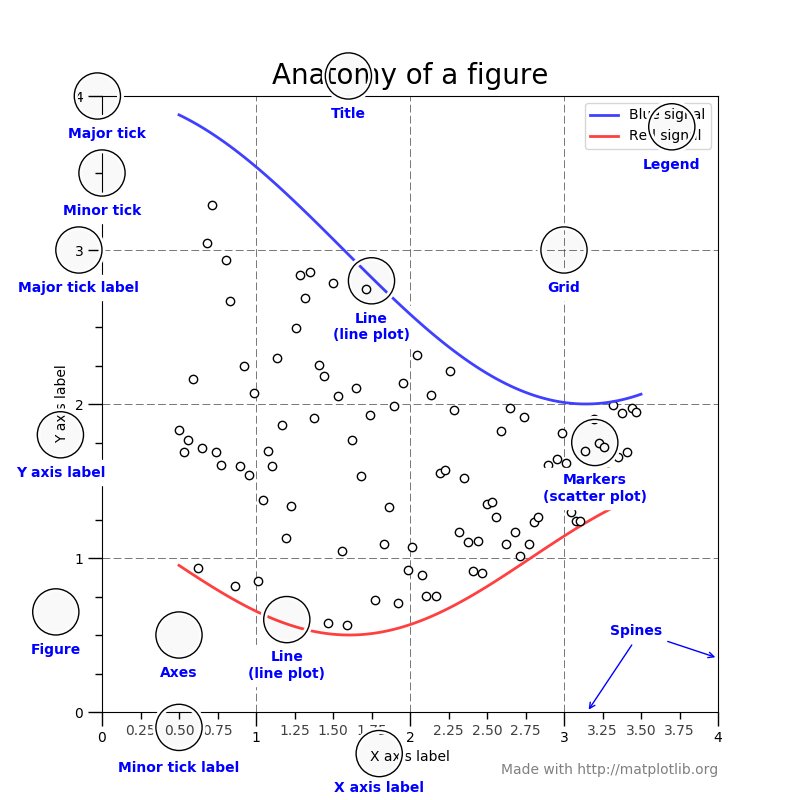
The pyplot API is generally less-flexible than the object-oriented API. Most of the function calls you see here can also be called as methods from an Axes object. We recommend browsing the tutorials and examples to see how this works.
Requires that all scripts and configuration files be signed by a trusted publisher, including scripts that you write on the local computer.
Prompts you before running scripts from publishers that you haven't yet classified as trusted or untrusted.
Risks running signed, but malicious, scripts.
Bypass
Nothing is blocked and there are no warnings or prompts.
This execution policy is designed for configurations in which a PowerShell script is built in to a larger application or for configurations in which PowerShell is the foundation for a program that has its own security model.
Data types of MySQL and Java programming language are not same, its need some mechanism for transferring data between an database using MySQL data types and a application using Java data types. We need to provide Java mappings for the common MySQL data types. We have to confirm that we have proper type information then only we can correctly store and retrieve parameters and recover results from MySQL statements.
There is no particular reason that the Java data type needs to be exactly isomorphic to the MySQL data type. For example, Java String don't precisely match any of the MySQL data CHAR type, but it gives enough type information to represent CHAR, VARCHAR or LONGVARCHAR successfully.